
Sara Croop

Nutrisystem

Manage
Auto-Delivery

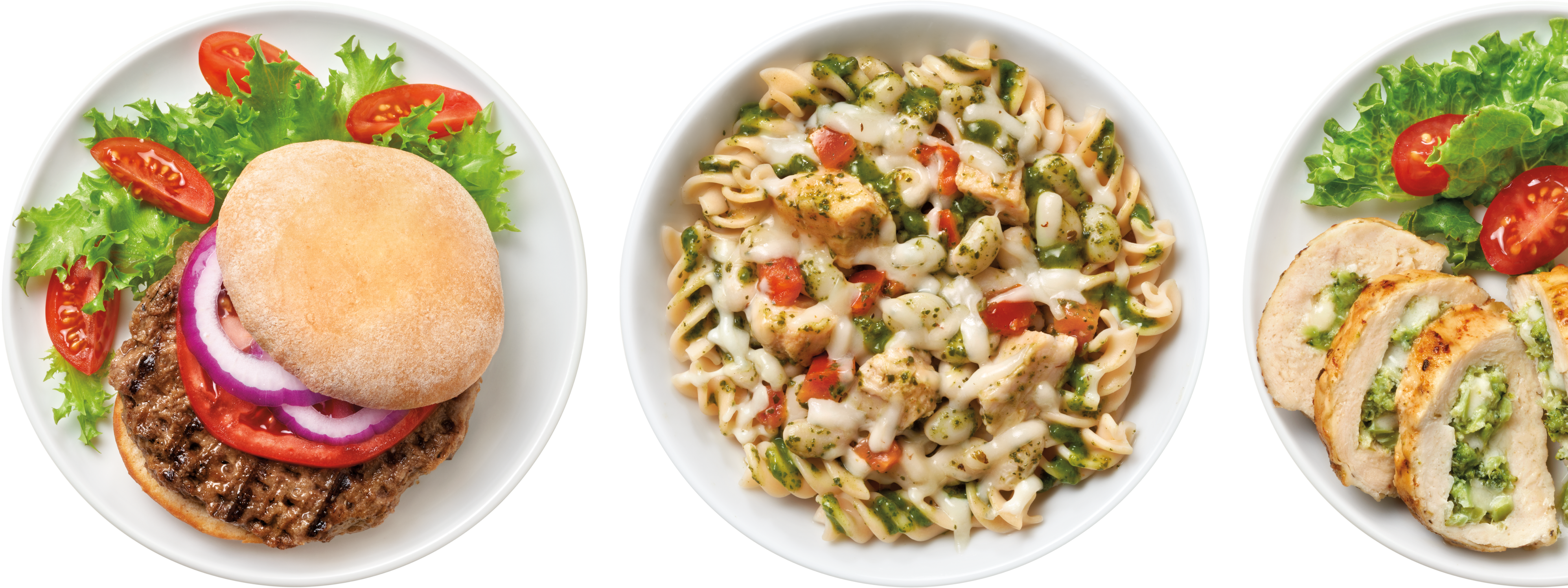
Three white plates with food: a hamburger with lettuce, tomato, and onion; a pasta dish with vegetables and sauce; and sliced stuffed chicken breast with a side of lettuce and tomato.
Project Goal

Revamping Manage Auto-Delivery for a dual-subscription model

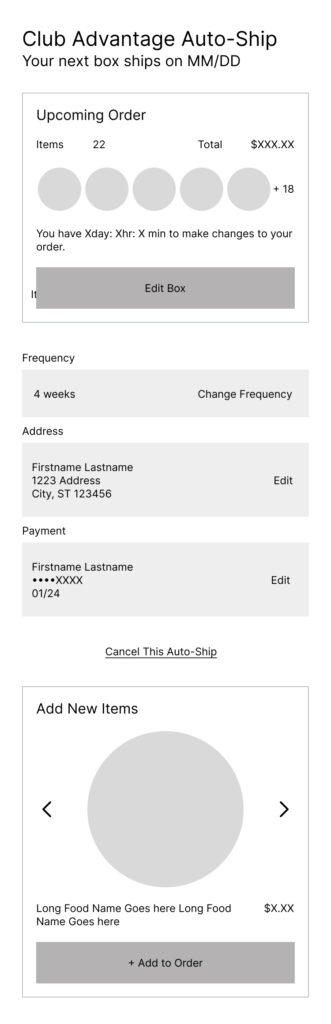
The business expanded from a structured program into a flexible a la carte Meal Club subscription, requiring an account experience redesign to handle both user paths seamlessly. Moving toward a modular dashboard created a unified experience that adapts to show either program-specific milestones or a la carte benefits based on the plan type.

Objective

Improve the customer experience for managing recurring orders across both structured plans and flexible a la carte subscriptions.

Role

User experience manager, contributing designer, project manager

Final Design

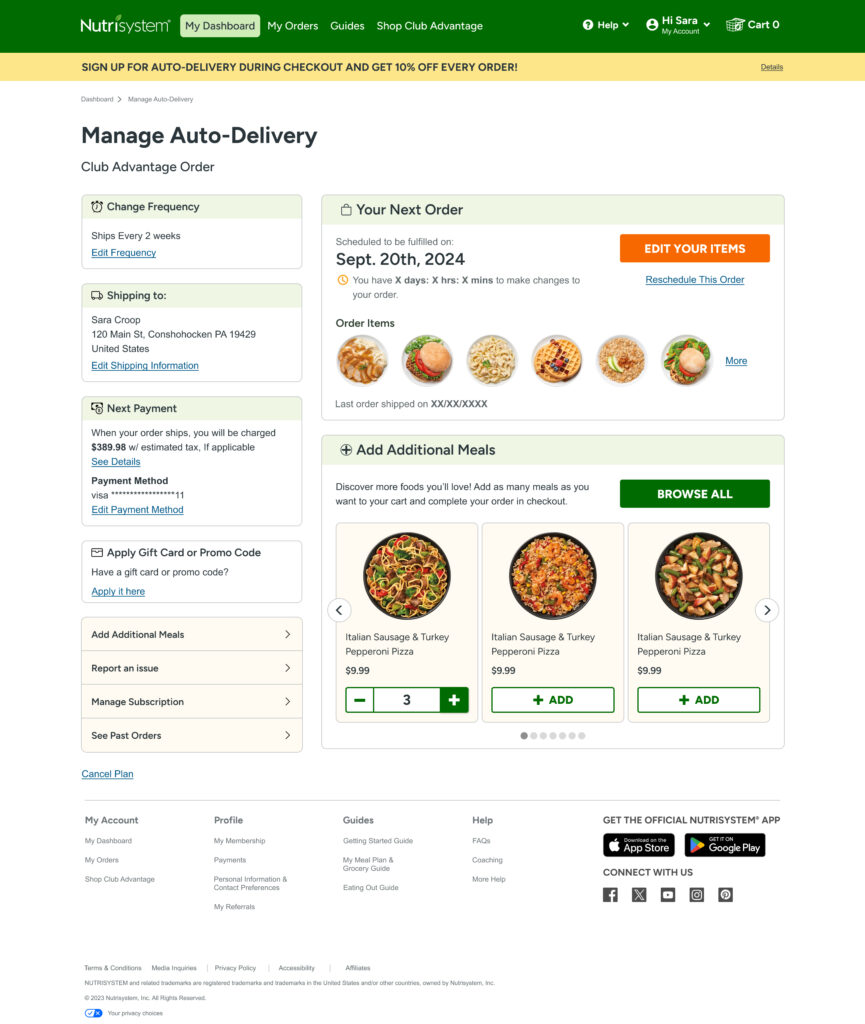
New auto-delivery dashboard

The page was reorganized with flexible modules to serve the needs of both structured plan and meal-club customers and reduce development time.

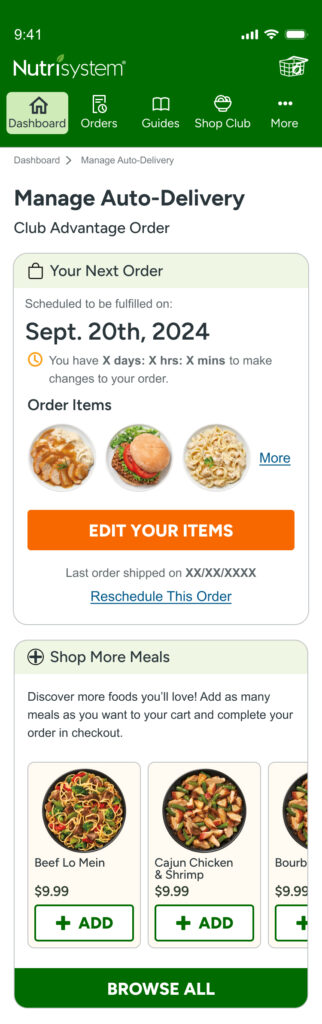
Manage next order page
Strategic Solutions

Optimizing for a mobile-first audience

Initial data showed that a long, untruncated list of items pushed critical account links so far down the page that 70% of users never saw them. This led to high customer support volume for tasks that should have been self-service.

  • Smart Truncation: Replaced the full order list with a preview module, bringing high-frequency management links above the fold to ensure they are accessible without excessive scrolling.

  • Information Hierarchy: Established distinct typography and styling to break up the previous “wall of text,” allowing users to scan and find their shipment or payment details instantly.

  • Business-Aligned Logic: Integrated the delay order function into the summary module rather than a standalone section. This satisfied the user need for flexibility while maintaining the stakeholder requirement to protect recurring revenue.

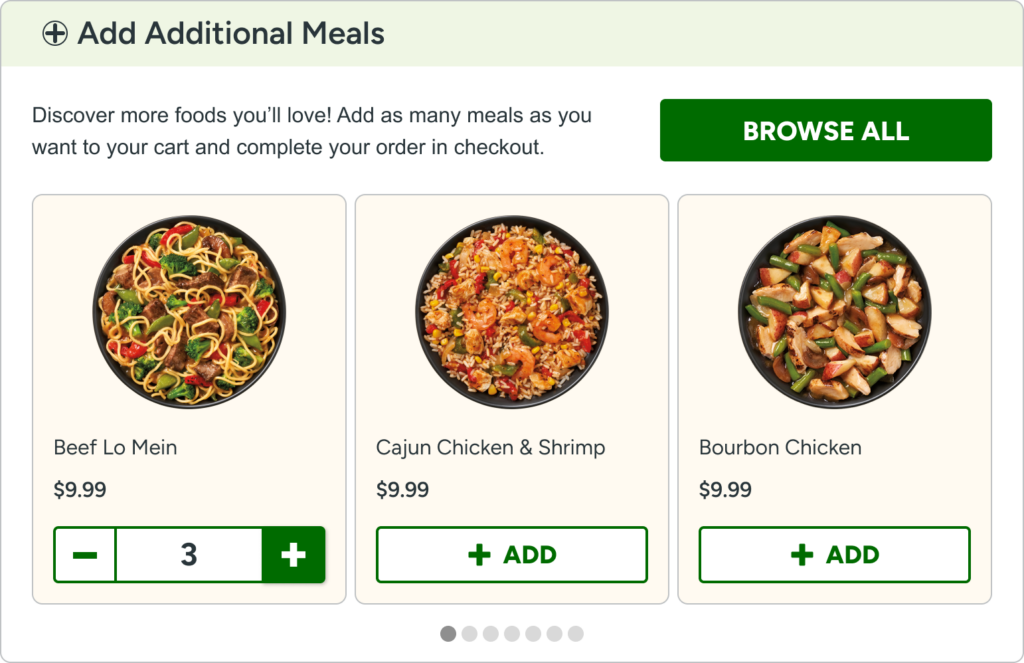
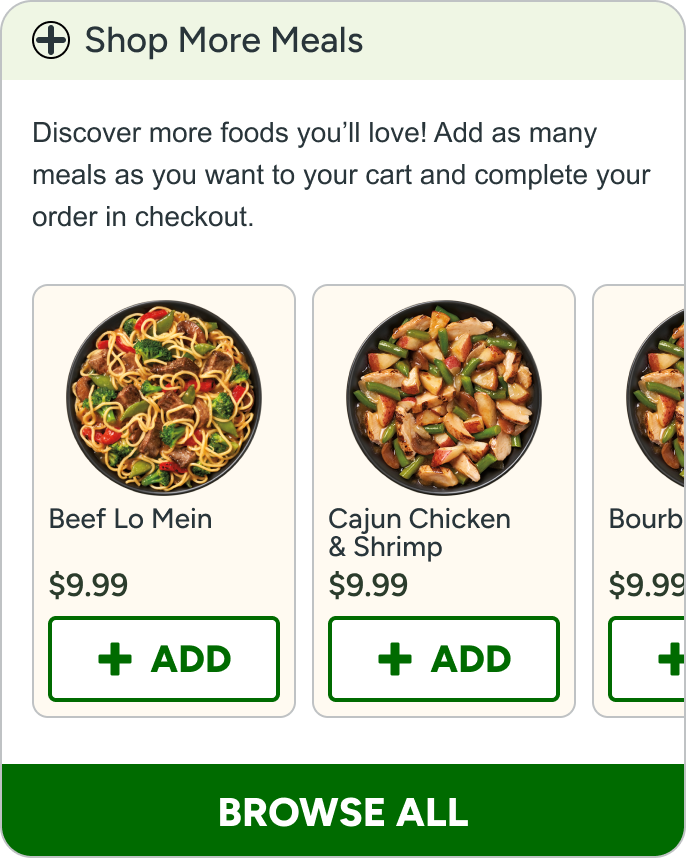
Add Additional Meals Module
Menu screen showing meal options with images: Beef Lo Mein, Cajun Chicken & Shrimp, and Bourbon Chicken, each priced at $9.99 with a green + ADD button below. A green BROWSE ALL button is at the bottom.
Revenue Growth

Expanding order value through discovery

To support the new business model, we needed a way to encourage members to explore more of the menu without adding friction to their management flow.

  • One-Tap Upsells: Designed an “Add Additional Meals” module that allows users to seamlessly add seasonal or top-rated items to their recurring order with a single click.

  • Contextual Placement: Positioned discovery options directly within the natural path of the dashboard, making it easy for users to customize their boxes while reviewing their shipment.

Solutions

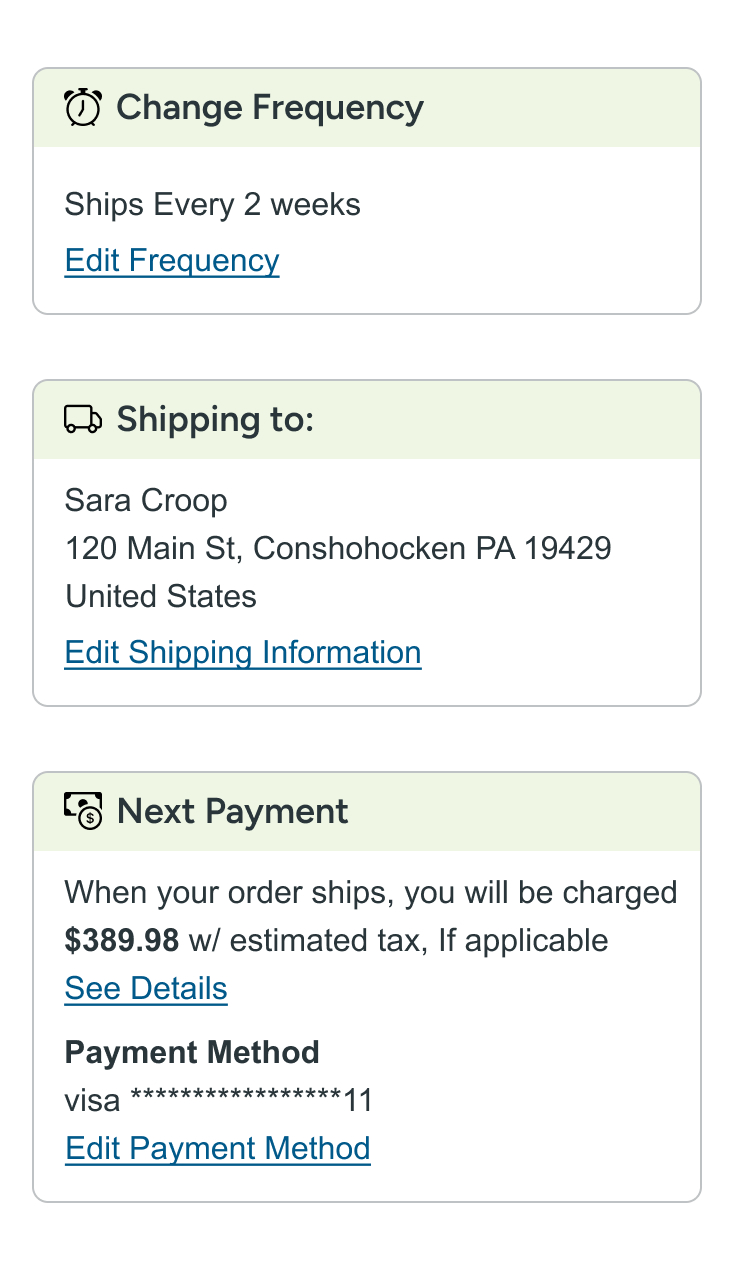
Quick access to most-used functions

The interface focuses on high-frequency tasks, removing friction from the monthly maintenance flow.

Account settings summary showing shipping frequency set to every 2 weeks, shipping address for Sara Croop in Conshohocken, PA, and next payment amount $389.98 with masked Visa card details.

Easy link access

High-frequency actions were moved to the top of the page allowing users to update their shipment and payment details without digging through menus.
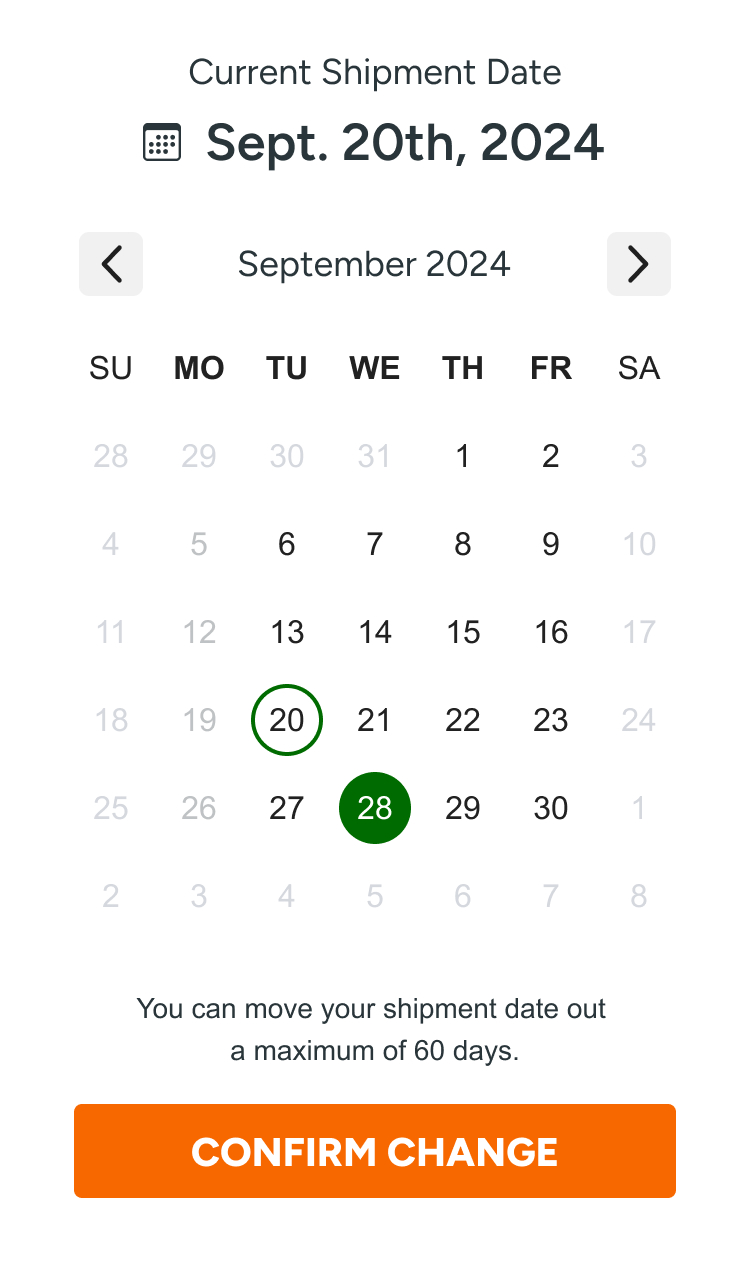
Shipment Date Selection Calendar

Quick order rescheduling

The shipment calendar was converted from a four-step process into a single, intuitive interaction.
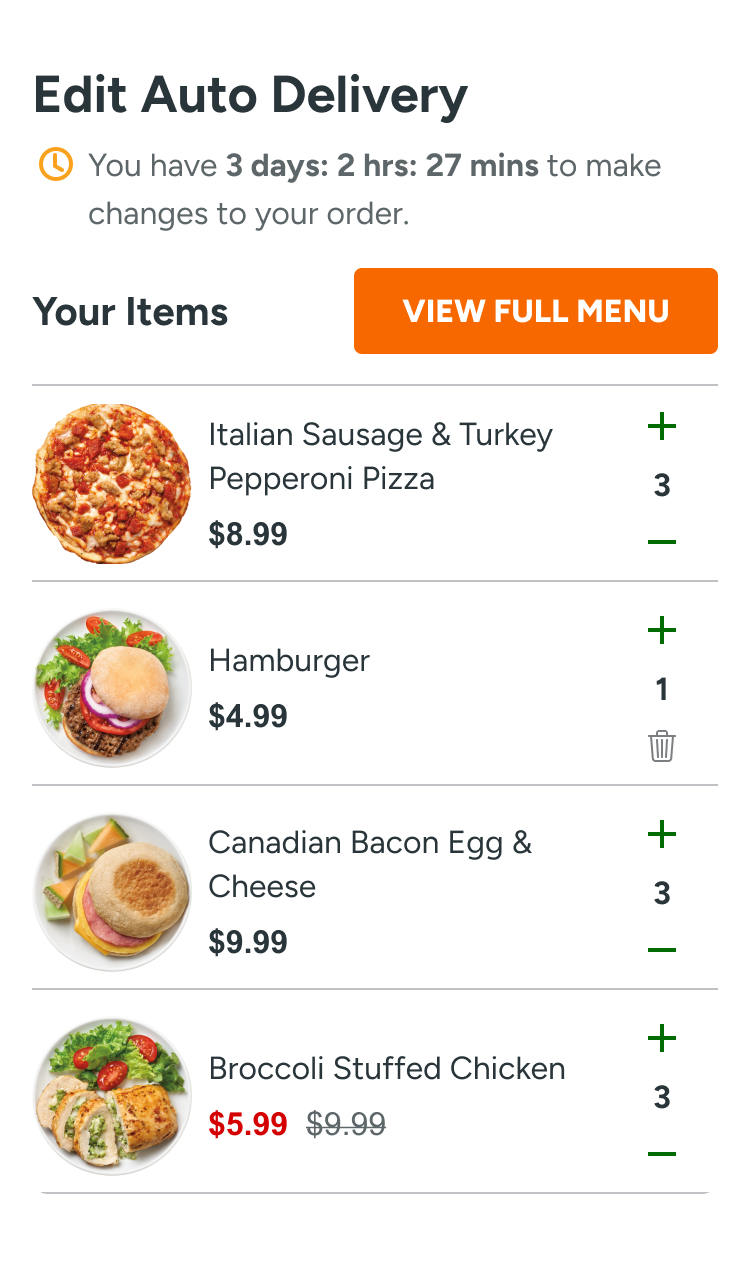
Food list quantity editing

In-line editing

One-tap quantity adjustments allow users to refine their orders instantly without leaving the page.

Impact

Optimizing for speed and retention

Redesigning the mobile hierarchy reduced the friction associated with monthly order maintenance, successfully balancing user efficiency with business revenue goals.

  • Improved Discoverability: By truncating the food list into a preview module, core management links were moved above the fold, addressing the issue where 70% of users previously failed to scroll to critical functions.

  • Reduced Support Volume: Streamlining the primary navigation allowed members to handle basic account tasks independently, decreasing the frequency of customer service calls for simple order updates.

  • Strategic Retention: The delay order function was integrated into the summary module as a strategic compromise, providing the necessary user control while protecting recurring revenue as requested by stakeholders.